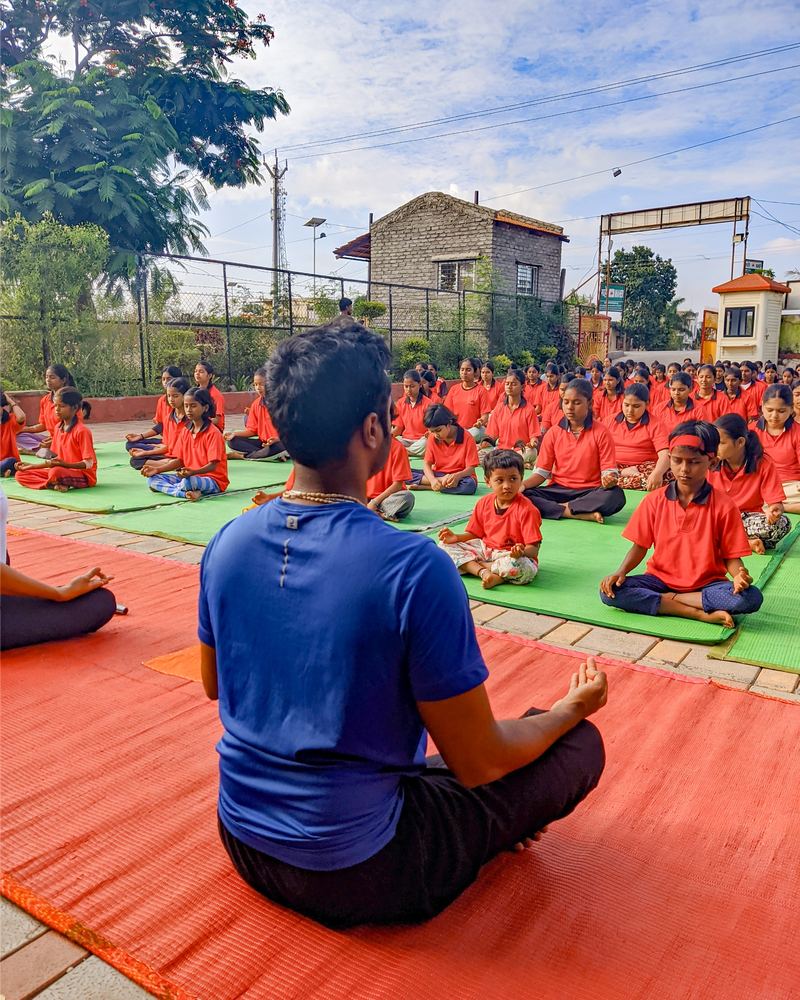
Search "yoga classes in Pune" and you'll get pages of results — gyms with a yoga slot bolted onto the timetable, studios running twenty-person classes, and independent teachers offering everything from Ashtanga to aerial yoga. Overwhelming, but it does mean there's something for every kind of student. The real question isn't where to find a class. It's how to tell, before you pay for one, whether it will actually work for you.
Here's what to look at.
1. Class size
A yoga class with twenty-five people in a room is a different experience from one with five. In a large class, the teacher is managing the room, not watching your alignment — corrections are generic, and an injury or a bad habit can go uncorrected for months. Smaller, capped classes cost more per head, but the attention is real: someone is actually watching how your spine moves in a forward fold, not just counting breaths from the front of the room.
If you're choosing between yoga classes in Pune, ask directly how many students are typically in a session. It's a fair question, and any teacher worth training with will answer it straight.
2. Teacher experience, not just certification
A 200-hour teacher training certificate is a starting point, not a guarantee. What tends to matter more in practice is how long someone has actually been teaching, whether they've trained beyond the minimum, and whether they can explain why a posture or breath pattern works the way it does — not just demonstrate it. If a studio's website doesn't tell you anything about who's actually teaching, that's worth noticing.
3. Online, in-person, or both
This has changed a lot in the last few years. Online yoga classes remove the commute and let you train consistently even on a packed week — genuinely useful if you travel for work or your schedule shifts often. In-person classes offer hands-on correction and a different kind of focus that's hard to replicate over video.
You don't have to choose only one. Plenty of people in Pune now do both: a steady rhythm of online sessions through the week, and an in-person session when they want deeper, hands-on correction or simply prefer to practice at home with someone present.
4. Whether the practice is personalised
Generic sequences work fine for a general fitness class. They work less well if you're carrying an old injury, recovering from a long period of inactivity, or training toward something specific — more strength, better sleep, lower stress, more flexibility. A class that's the same for every student every week is a class that isn't really built around you.
5. What happens after class ends
Good teaching doesn't stop at the end of the session. Ask whether you can message your teacher with questions between classes, whether progress is actually tracked, and whether the sequence evolves as you improve — or whether you'll be doing the same opening sun salutations in month six as you were in week one.
How Mind Muscle Yoga approaches this
I built Mind Muscle Yoga around the points above, because they're the things that made the biggest difference in my own fifteen-plus years of teaching and training. In practice, that means:
- Small, capped classes. Online group sessions are kept deliberately limited, so everyone still gets real attention — not just a tile on a screen.
- Online classes for anyone, anywhere in India. Live sessions in Ashtanga Vinyasa, Hatha, pranayama, and meditation — Monday, Wednesday, and Friday mornings, or a single session if you'd rather try it first.
- In-person sessions for Pune. If you're based in Pune and prefer to practice at home, I travel to you for a fully private, in-person session — format, focus, and schedule built entirely around what you need.
- A background in sound healing too. For students who want to pair movement with deeper nervous-system rest, Tibetan singing bowl sound healing sessions are available alongside the yoga practice.
If you're comparing yoga classes in Pune and want to see whether this is the right fit, the easiest first step is a single online session — no long-term commitment, just a chance to feel how the class actually runs before deciding anything.
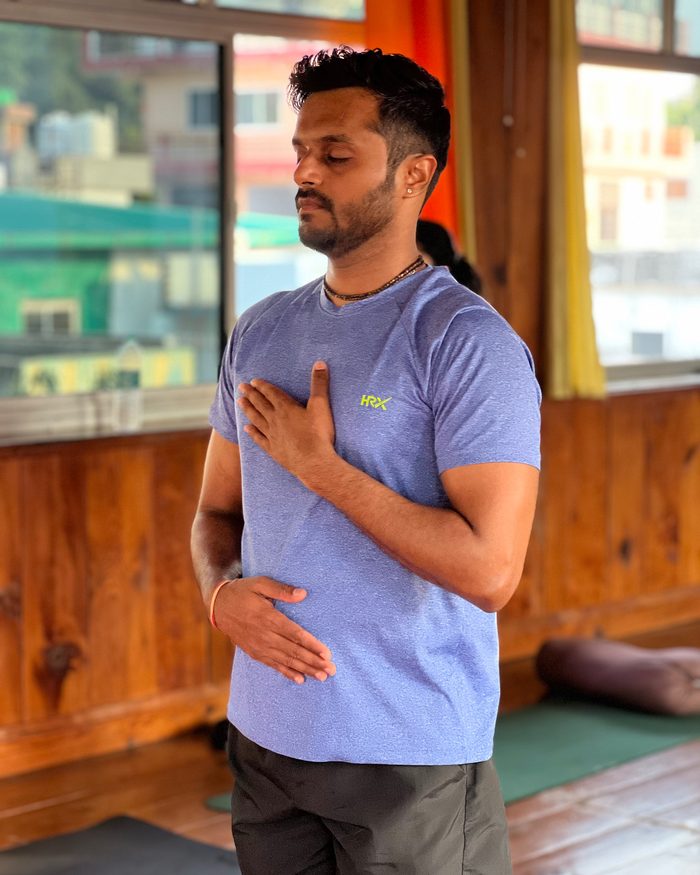
Prathamesh Chavan
Lead teacher at Mind Muscle Yoga. 15+ years in fitness and movement, trained in Rishikesh, and a sound healer.