You have ten minutes before the next call, the next pitch, the next difficult conversation. Most of us fill them the same way: one more email, one more scroll, one more coffee. Then we walk in with a racing mind and a tight chest, and wonder why we feel a step behind.
There is a better use of those ten minutes, and it costs nothing. It starts with something you have been doing all day without noticing: breathing.
Why the breath works
Most of what happens in your body under pressure is automatic — heart rate, muscle tension, the speed of your thoughts. Breath is the rare exception. It runs on its own, but you can also take hold of it. When you slow the breath down, and especially when you lengthen the exhale, the body tends to read that as a signal that it is safe to settle.
Yoga has understood this for centuries. It is the whole idea behind pranayama, the practice of working with the breath deliberately. It is also why breathwork is one of the most practical tools I teach to people with demanding schedules: you can do it in a chair, in a corridor, in a parked car. Nobody needs to know.
The ten-minute reset
Find a quiet spot and sit comfortably, spine tall but not stiff, feet flat on the floor. Set a timer if it helps you stop watching the clock.
1. Arrive
2 minutes
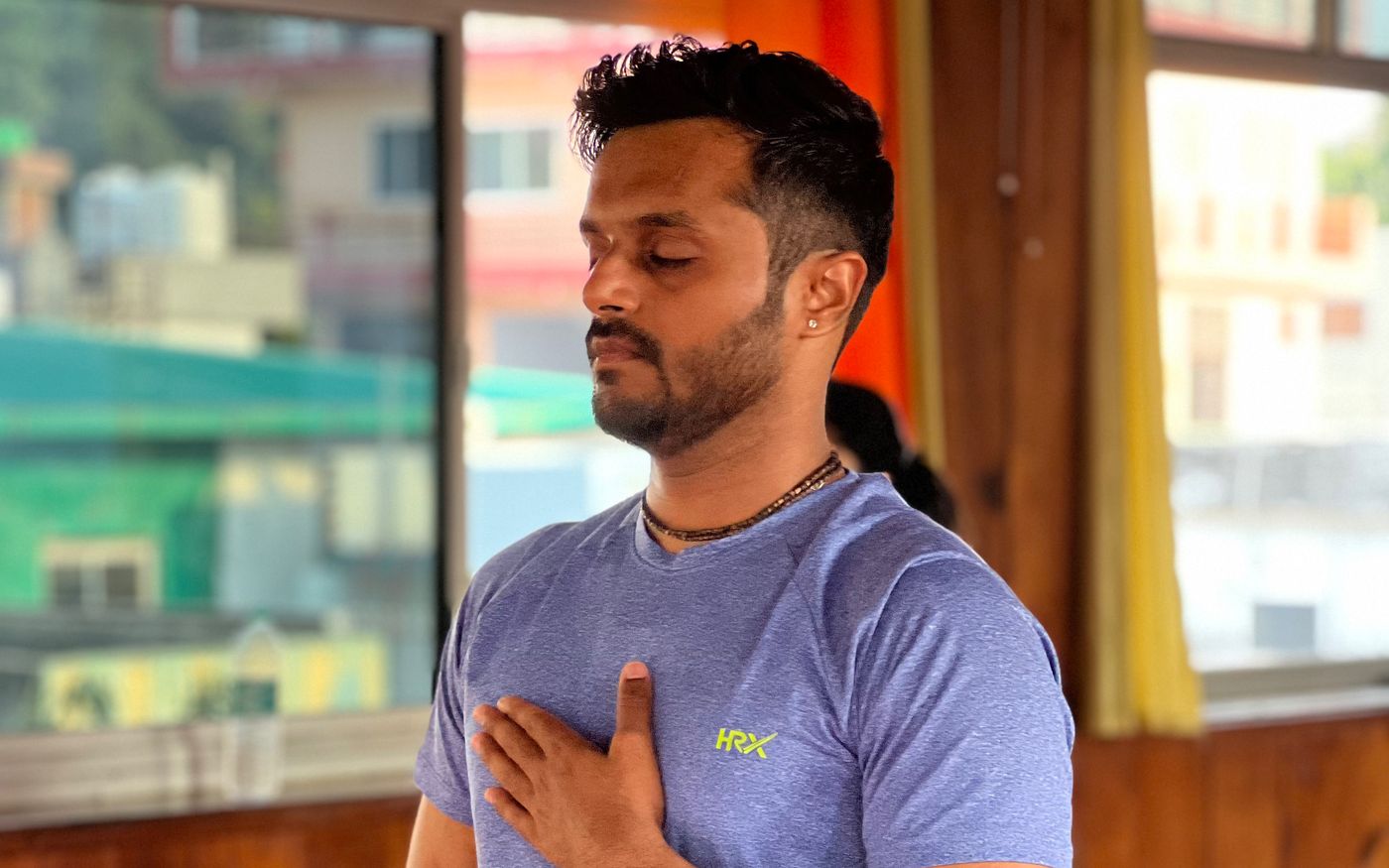
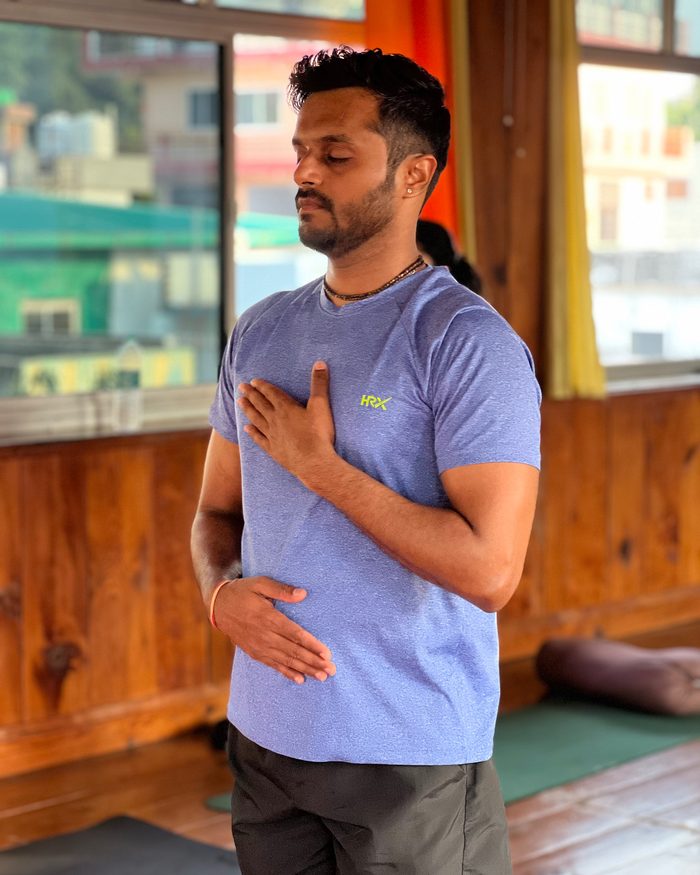
Close your eyes, or soften your gaze. Place one hand on your chest and the other on your belly. Simply notice your breath as it is — do not change it yet. Then let each inhale travel low, so the hand on your belly rises a little more than the one on your chest. This is diaphragmatic breathing, and it is the foundation of everything that follows.
2. Lengthen the exhale
4 minutes
Breathe in through the nose for a count of four. Breathe out slowly through the nose for a count of six. Keep it smooth and easy — the breath should never feel forced. If six feels like too much, breathe in for four and out for five. Once it feels natural, you can stretch the exhale towards eight over time.
3. Alternate nostril breathing
3 minutes · Nadi Shodhana
Rest your left hand on your knee. Bring your right hand up, fold the index and middle fingers towards the palm, and use your thumb and ring finger to close each nostril in turn.
- Close the right nostril with your thumb and inhale slowly through the left.
- Close the left nostril with your ring finger, release the thumb, and exhale through the right.
- Inhale through the right.
- Close the right, release the left, and exhale through the left.
That is one round. Continue for about three minutes, keeping the breath quiet and even.
4. Close
1 minute
Release the hand and return to natural breathing. Sit for a few breaths and ask yourself one simple question: what do I want from this next hour? Then open your eyes, and go in.
A few notes before you begin
- Never strain. If you feel lightheaded or uncomfortable at any point, stop and return to normal breathing.
- Skip breath holds for now. Nothing in this sequence requires them.
- Check first if needed. If you are pregnant, or have a heart or respiratory condition, speak to your doctor before starting a pranayama practice.
- Little and often. A few minutes every day will do more for you than one long session now and then.
Where to go from here
This sequence is a starting point, not the whole practice. In my online sessions — one-on-one, or in small, exclusive group classes — we build on it with Ashtanga Vinyasa, Hatha, deeper pranayama and meditation, shaped around your body and your week. If you would like to try it with guidance, I would be glad to hear from you.
Prathamesh Chavan
Lead teacher at Mind Muscle Yoga. 15+ years in fitness and movement, trained in Rishikesh, and a sound healer.